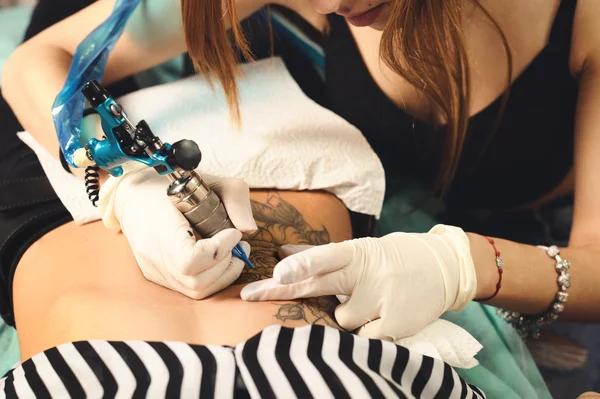
Tattooing over or around stretch marks is a unique art form that requires careful consideration and expertise. Stretch marks, known medically as striae, are common skin imperfections that occur when the skin stretches or shrinks quickly. This rapid change causes the collagen and elastin in the skin to rupture, resulting in scars as they heal. For those considering tattoos in areas with stretch marks, several factors must be taken into account to ensure both aesthetic satisfaction and skin health.
Firstly, it is vital to assess the condition of the stretch marks themselves. Fresh stretch marks, which are typically red or purple, may still be healing and can be more sensitive than older ones. Tattooing over new stretch marks can cause additional trauma to the area and may result in increased pain during the procedure. It is generally recommended to wait until these marks have matured into their final white or silver appearance before proceeding with a tattoo.
The texture of stretch-marked skin differs from normal skin; it tends to be thinner and more delicate due to its scarred nature. This presents a challenge for tattoo artists who must adjust their techniques accordingly. A skilled artist will understand how to work with this type view our site of skin by modifying needle depth and pressure during application. The goal is to achieve even ink saturation without causing further damage or discomfort.
Design choice plays a crucial role when tattooing over or near stretch marks. Intricate designs might not translate well due to uneven textures; thus, simpler patterns often yield better results on such surfaces. Additionally, color selection should complement rather than contrast too starkly with existing scarring for a harmonious blend.
Consultation with an experienced tattoo artist is essential before making any decisions about placement or design involving areas affected by stretch marks. An expert will provide insights tailored specifically towards individual cases while considering personal preferences alongside technical feasibility.
Pain tolerance varies among individuals but tends toward being heightened where there are underlying conditions like scarring present—this includes areas marked by striae distensae (stretch-marks). Clients should mentally prepare themselves for potentially increased sensitivity compared against non-affected regions during sessions involving these zones.
Post-tattoo care becomes even more critical following procedures done atop stretched-skin sites since proper aftercare ensures optimal healing outcomes without complications arising post-session(s).